

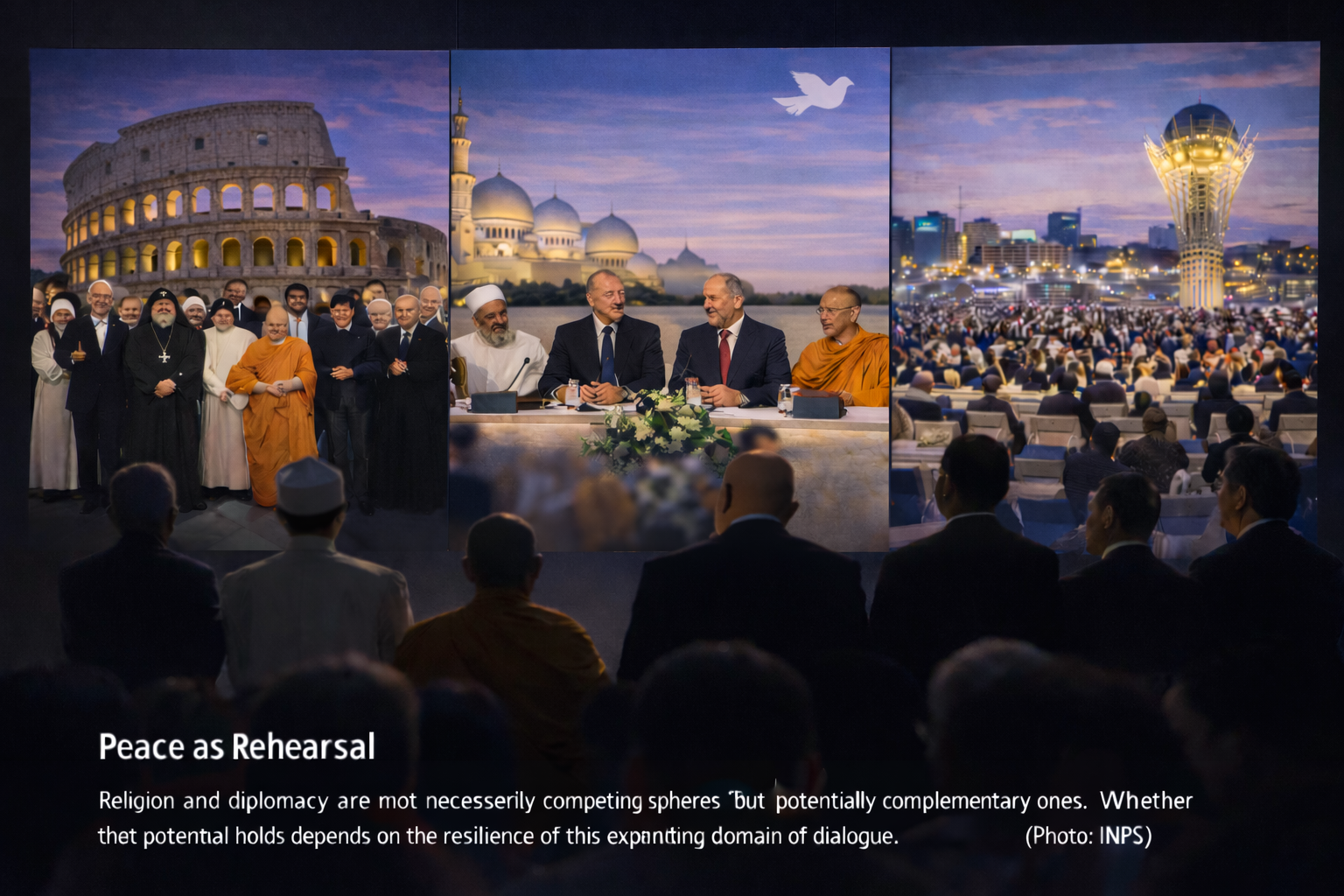

A New International Space Where Faith and Diplomacy Intersect
By Katsuhiro Asagiri
ABU DHABI (INPS Japan) – As wars drag on and the international order grows increasingly unstable, Abu Dhabi has been offering a different kind of narrative. It sought to recognize early efforts at reconciliation, bring religious leaders into the same space, and place former adversaries under the same spotlight. At the heart of the February 4, 2026 Zayed Award for Human Fraternity ceremony was an attempt to make visible, in a public setting, the choice of moving in the direction of easing conflict.|JAPANESE|CHINESE|KOREAN|
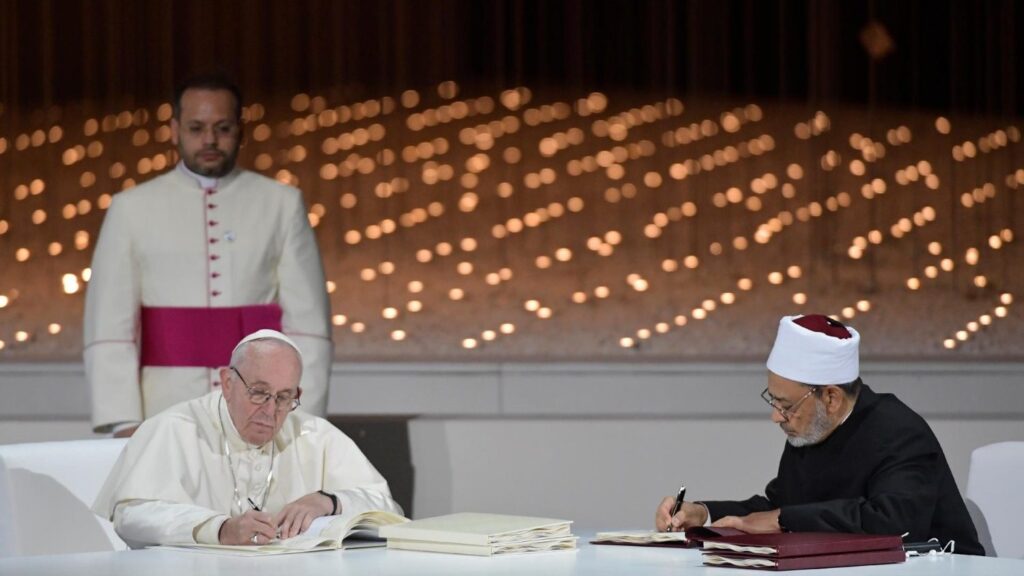
Timed to coincide with the United Nations–designated International Day of Human Fraternity, the ceremony drew heads of state, religious leaders and civil-society representatives. The award traces its origins to the 2019 Document on Human Fraternity, signed in Abu Dhabi by Pope Francis and the Grand Imam of Al-Azhar, Ahmed Al-Tayeb. The document is widely regarded as a historic declaration that set out a global call for interreligious dialogue and peaceful coexistence.
Seven years on, the international landscape has become even more fragmented. Even so, the organizers have framed the ceremony not merely as an awards event, but as a symbolic platform intended to encourage a minimum measure of restraint when politics turns turbulent.
Shoring Up a Fragile Peace
The moment that drew the most attention this year was the recognition of Armenian Prime Minister Nikol Pashinyan and Azerbaijani President Ilham Aliyev for their peace agreement. After decades of confrontation, the award functioned as a form of international endorsement for a still-fragile peace process in the South Caucasus.
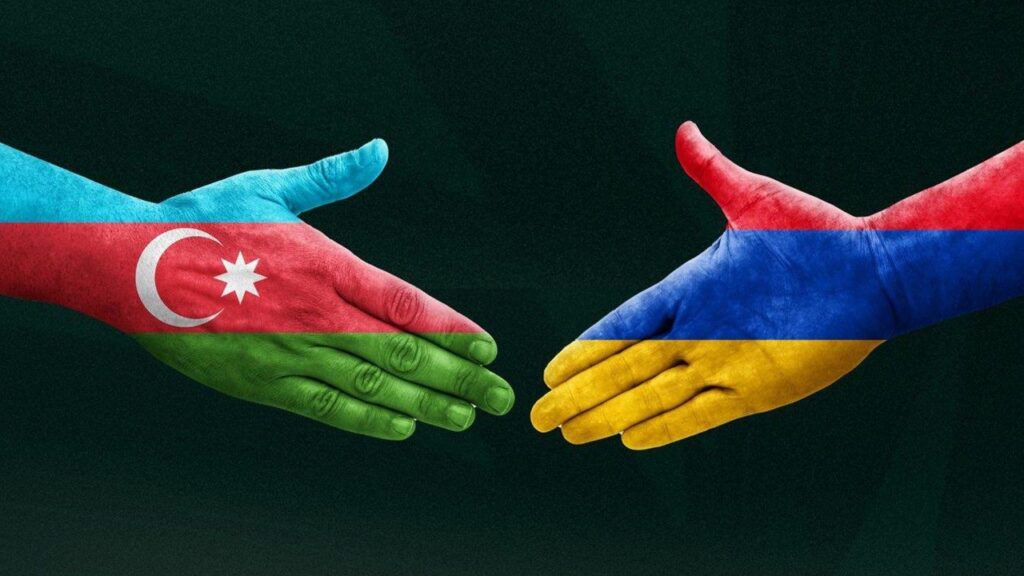
Peace agreements are often most vulnerable immediately after they are reached. Domestic political backlash and deep-seated mistrust can easily undermine implementation. In that sense, bringing the two leaders onto the same stage was not a declaration that the journey was complete; it was an attempt to “reinforce” diplomatic progress. By recognizing leaders who chose dialogue at an early stage, the award appears aimed at widening the political space for compromise—and at making it harder for opponents to overturn the agreement.
The award, however, extended beyond state leadership. The 2026 laureates also included Afghan girls’ education advocate Zarqa Yaftali and the Palestinian nonprofit Taawon, honoring efforts to continue humanitarian and development work under conditions of conflict and political instability. It also underscores the award’s intention to bridge “top-down politics,” such as peace agreements, with “bottom-up peacebuilding” that supports communities on the ground. The underlying message is clear: even with treaties and agreements in place, peace cannot take root if the schools, healthcare, and local support systems needed to sustain society remain fragile.
A Dialogue Circuit Linking Rome and Astana
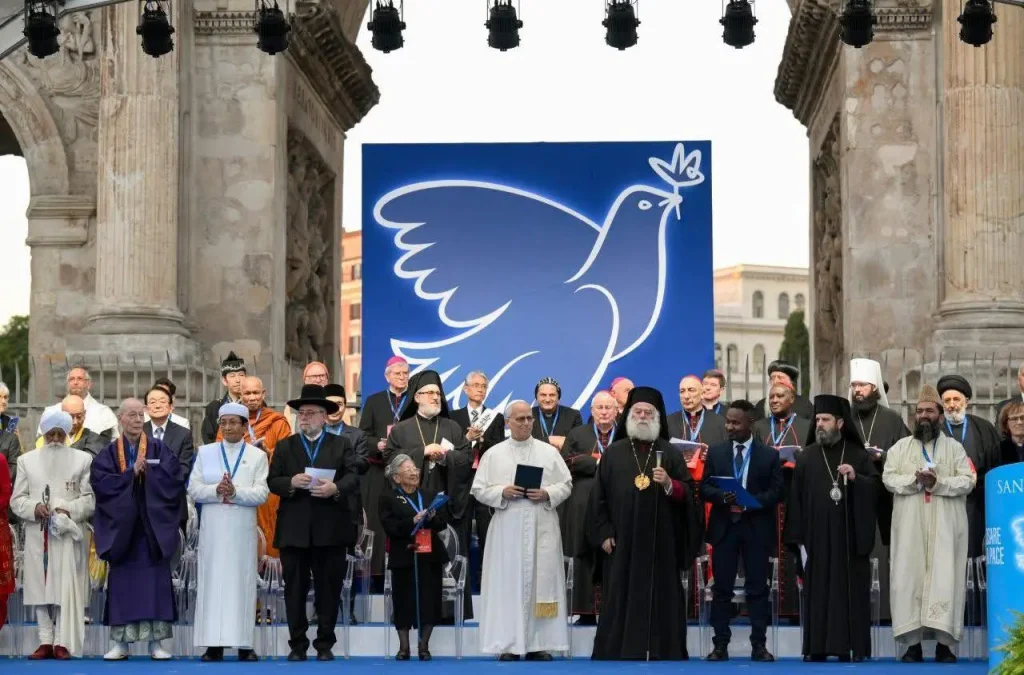
Abu Dhabi’s ceremony is not an isolated event. In October 2025, Rome hosted the annual forum “Religions and Cultures in Dialogue for Peace,” organized by the Community of Sant’Egidio. Inheriting the spirit of the 1986 Assisi gathering, the forum serves as a continuing platform that brings together religious leaders, political figures, and representatives of civil society. The Holy See (the Vatican) is a central participant, exercising its moral authority to connect ethical appeals with debates in international politics.
Further east, Kazakhstan has institutionalized interfaith engagement through the Congress of Leaders of World and Traditional Religions in Astana. Both the Holy See and the Grand Imam of Al-Azhar have consistently participated, helping to sustain the congress as a venue for structured interreligious dialogue.
Seen in this light, Rome, Astana, and Abu Dhabi are not merely separate events; they emerge as nodal points in a broader space of dialogue that links religion and diplomacy. Put differently, they function like a regular service designed to keep the lines of communication open—ensuring that the ability to meet and talk does not fall silent.
Religious Actors Across Borders
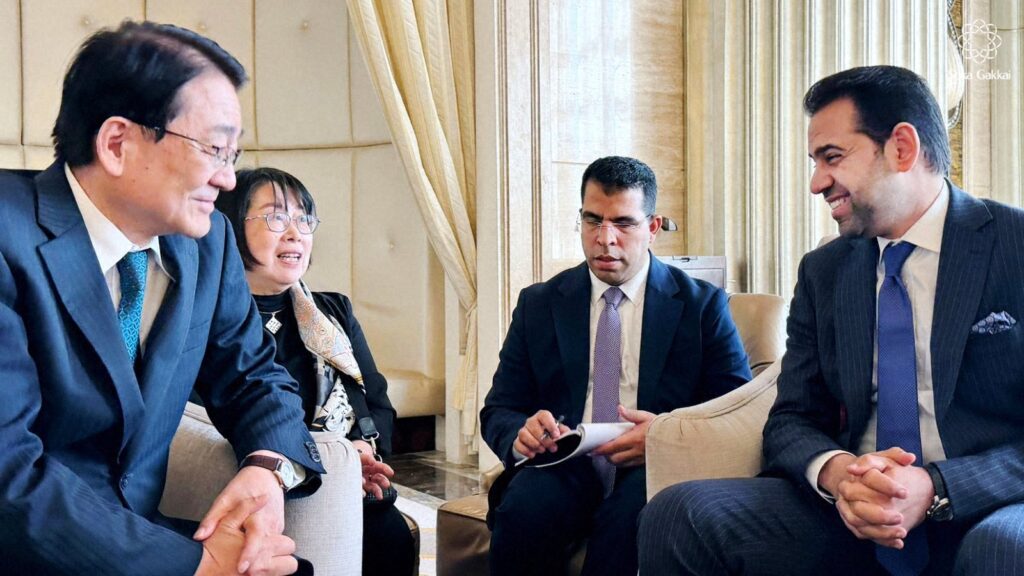
Not only states sustain this network. Like the Holy See and religious leaders from around the world, Hirotsugu Terasaki, Director-General for Peace Affairs of Soka Gakkai International (SGI) — an organization with some 13 million members worldwide — has taken part in dialogue venues in Abu Dhabi, Rome and Astana.
Ahead of the Abu Dhabi ceremony, Terasaki met with Judge Mohamed Abdelsalam, Secretary-General of the award, and delivered a letter from Minoru Harada, President of Soka Gakkai, addressed to Grand Imam Ahmed Al-Tayeb. The two exchanged views on the need to further strengthen “heart-to-heart dialogue” that transcends religious differences.
The stages created by the United Arab Emirates and Kazakhstan—both of which place emphasis on “spiritual diplomacy”—are more than mere events. What gives these settings moral authority and lends them ethical weight as arenas for peacebuilding is a sustained architecture of dialogue, underpinned by relationships that religious and civil-society leaders have cultivated over many years. Put differently, it is a system for meeting regularly and ensuring that lines of communication do not fall silent. Even when interstate relations grow tense, religious and civil-society networks can keep channels of dialogue open, serving as a buffer against rupture.
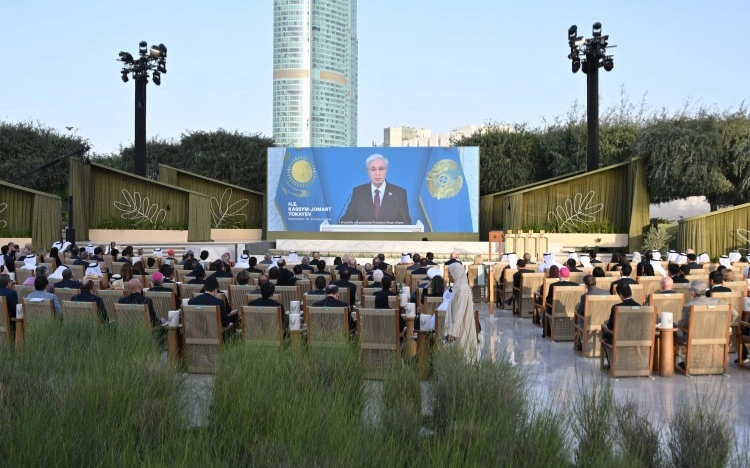
The fact that Kazakh President Kassym-Jomart Tokayev engaged with this year’s award ceremony through a video address, and that Director-General Terasaki has moved across dialogue venues such as Abu Dhabi, Rome, and Astana, quietly suggests the presence of such networks where religion and diplomacy intersect. Likewise, the Holy See has also been one of the actors continuously involved in all three of these settings.
Shared Words, Different Realities
The vocabulary repeatedly invoked in these forums is strikingly consistent: fraternity, coexistence, dialogue, and human dignity. At a time when multilateralism is faltering and traditional channels of mediation are weakening, this language also serves a political purpose—allowing states to signal, at home and abroad, a preference for dialogue over force and to project the image that they are not stoking confrontation, but providing a venue in which tensions can be managed.
Yet the distance between ceremony and reality does not disappear. Celebrating a peace agreement does not necessarily guarantee its implementation. Honoring efforts in girls’ education does not automatically reopen classrooms. Proclaiming coexistence does not stop violence overnight. Awards can encourage compromise and bless dialogue, but they are not mechanisms that can compel outcomes.
Even so, governments and religious and civil-society networks continue to engage in these venues—through attendance, public statements, and sustained involvement—because they remain among the few public settings where opposing parties can appear side by side. There are not many spaces where actors in tense relationships can stand in the same room, where restraint is openly affirmed, and where interfaith ties can function as informal diplomatic channels.
A Place to “Rehearse” Peace

The Zayed Award for Human Fraternity, the peace commemorations in Rome, and the interfaith congress in Astana—taken together—reveal the growing reach of a diplomatic approach that advances not through force or pressure, but through convening, dialogue, and the steady maintenance of relationships. It is a framework that can be symbolic at times, yet capable of exerting a quiet influence.
They also point toward the emergence of a new diplomatic domain where religion, civil society and state interests converge.
In today’s international environment, it is precisely these small points of contact that can carry real significance. Before peace is institutionalized as policy, there are only limited spaces where its shape can be publicly “rehearsed.”
The Abu Dhabi ceremony is one of those rare stages. It did not resolve a conflict, nor did it erase suspicion. Even so, choosing dialogue—and continuing to make that choice visible in the open—constitutes an act in itself: a clear signal, in an age of polarization, of a commitment to restraint over enmity.
INPS Japan
Related articles:
At Rome’s Colosseum, Faith Leaders Confront a World at War — and Dare to Speak of Peace
Disarmament: A Natural Buddhist-Catholic Alliance, Explains Japanese Leader
Kazakhstan’s Interfaith Initiative: Fostering Global Harmony through Wisdom and Leadership