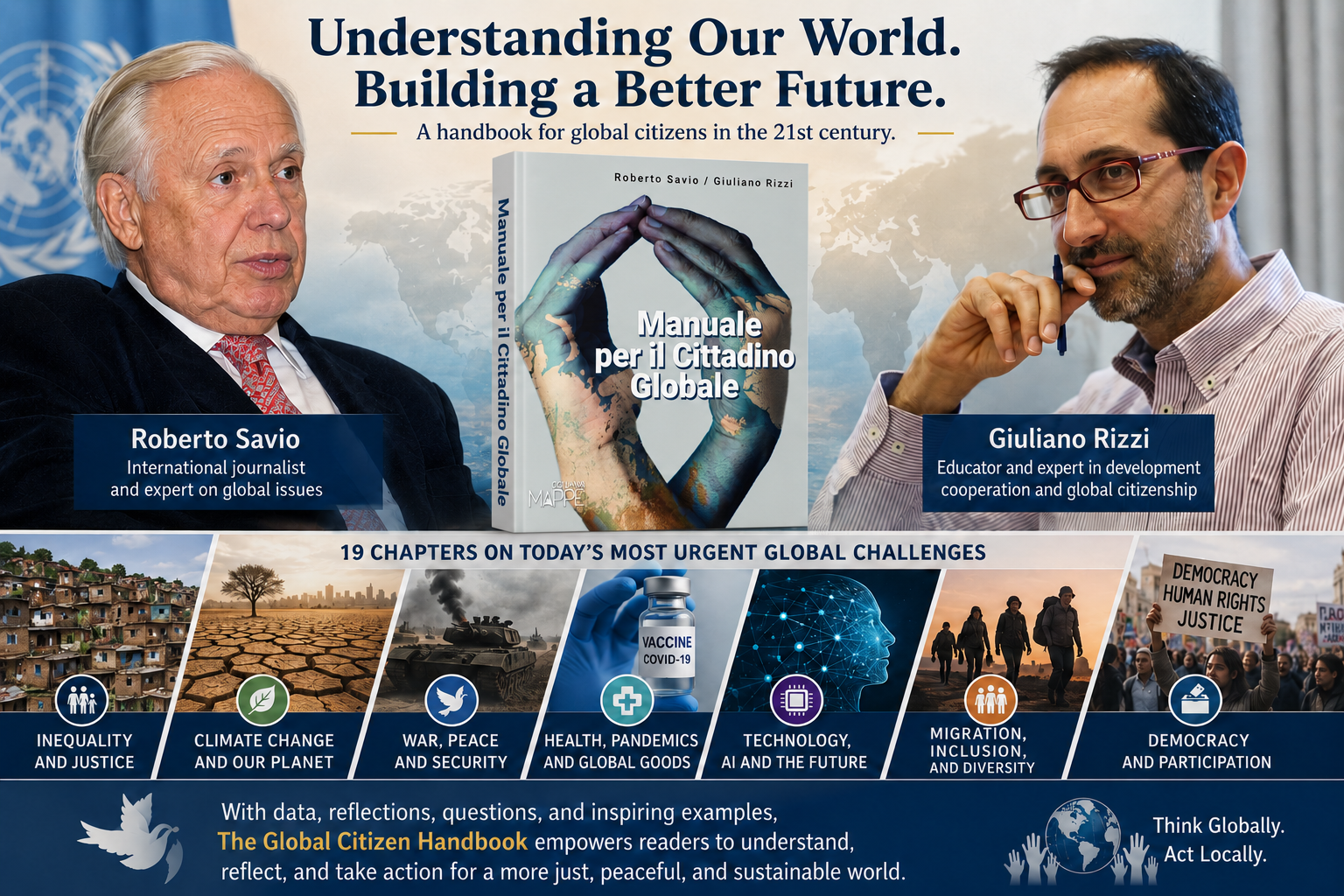

At a time when climate change, war, widening inequality and artificial intelligence are reshaping the world, Roberto Savio and Giuliano Rizzi argue that humanity needs a new kind of citizenship. In this exclusive interview with Katsuhiro Asagiri, President of INPS Japan, conducted in Rome, Savio reflects on what inspired The Global Citizen Handbook and explains why helping young people understand an increasingly complex and interconnected world has become one of the defining educational challenges of our time. He also shares a special message for readers of the ongoing INPS Japan–Soka Gakkai International (SGI) media partnership, recalling the vision he and Dr. Daisaku Ikeda shared when the two like-minded organizations launched their pioneering collaboration to promote global citizenship in 2009. |JAPANESE|
By Katsuhiro Asagiri
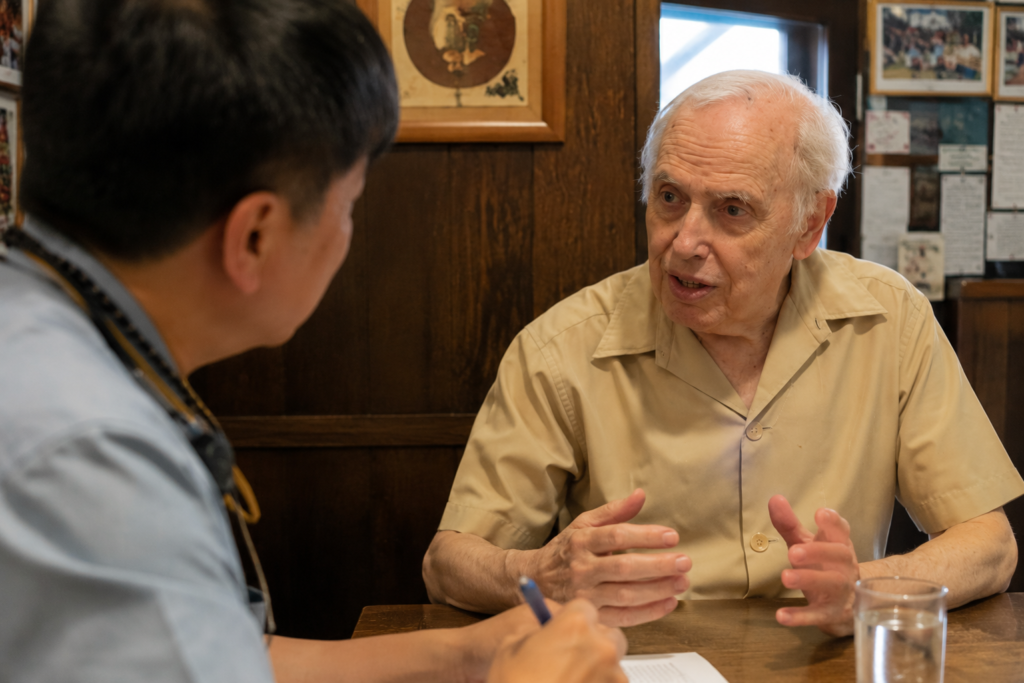
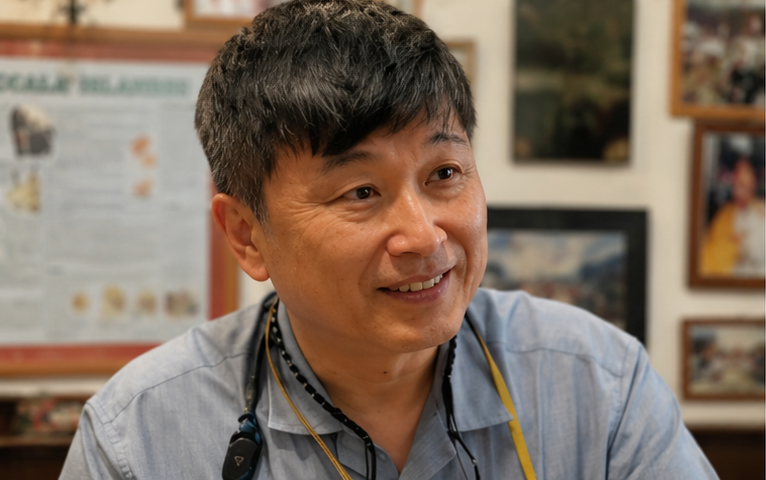
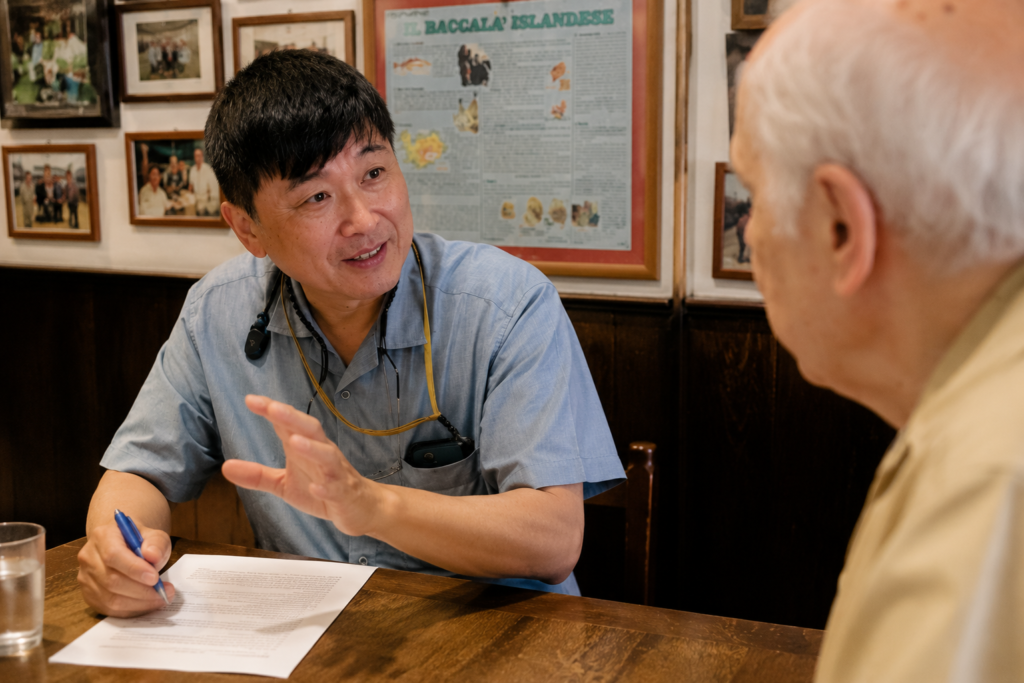
Rome (INPS Japan) — Roberto Savio does not begin by talking about his new book.
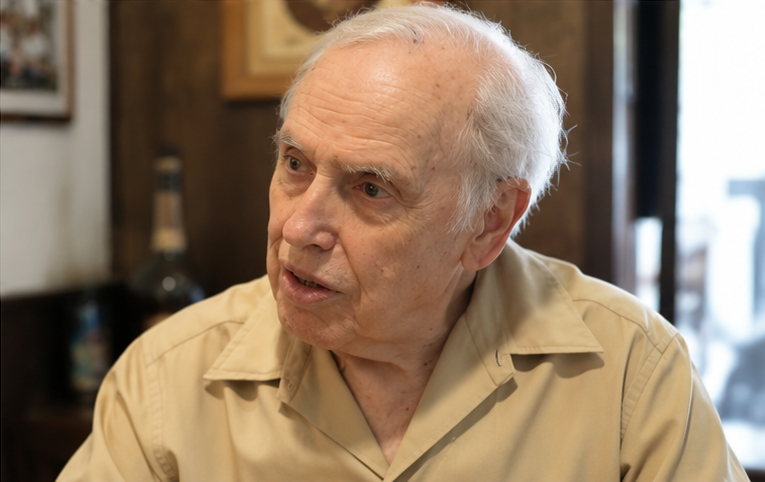
He begins by talking about today’s young people.
“The uncertainties facing a young graduate today are fundamentally different from those experienced by their parents, let alone their grandparents,” he said.
The comparison is striking.
The generation that emerged from the devastation of the Second World War inherited cities in ruins, yet also a profound belief that reconstruction would build a better world. The creation of the United Nations symbolized that optimism.
By the 1990s, another generation entered adulthood with a different kind of confidence. Industrialization, technological progress and expanding economies offered a reasonable expectation of stable employment, home ownership and a secure future.
Today’s graduates inherit something altogether different.
Climate disruption, widening inequality, geopolitical rivalry, uncontrolled financial markets, demographic decline, armed conflict and artificial intelligence have converged to create a level of uncertainty that few previous generations have experienced.
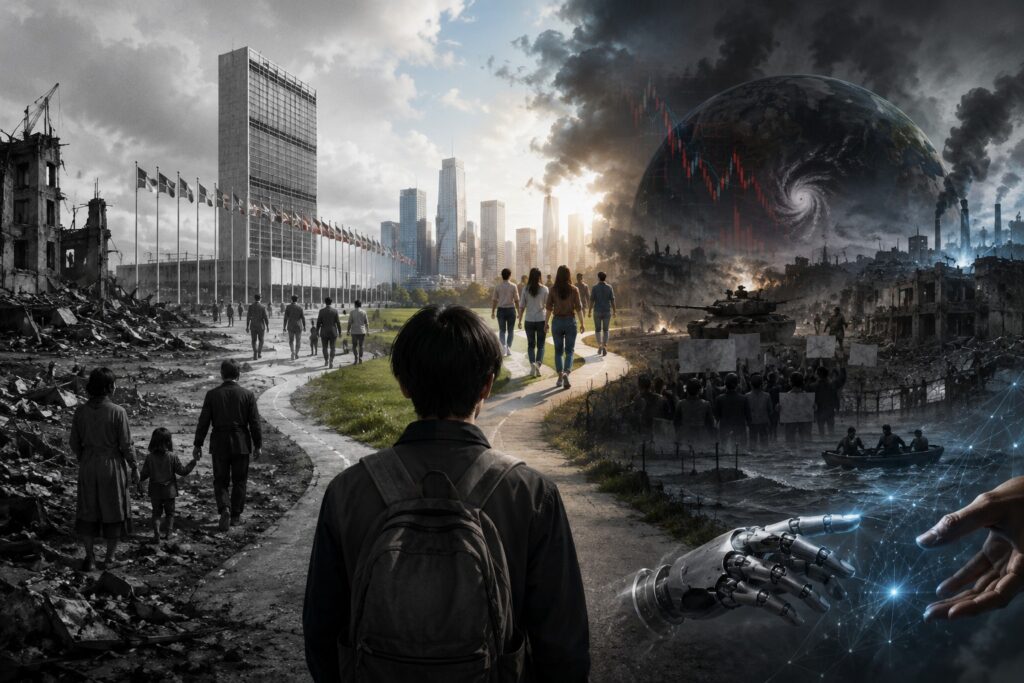
“The world is full of uncertainty,” Savio observed. “Climate change, growing international disorder, finance without effective controls, the return of great-power politics, proliferating conflicts and an unprecedented demographic crisis have become the political, economic and social landscape confronting young people today.”
Yet, he argues, objective uncertainty tells only part of the story.
There is also a crisis of understanding.
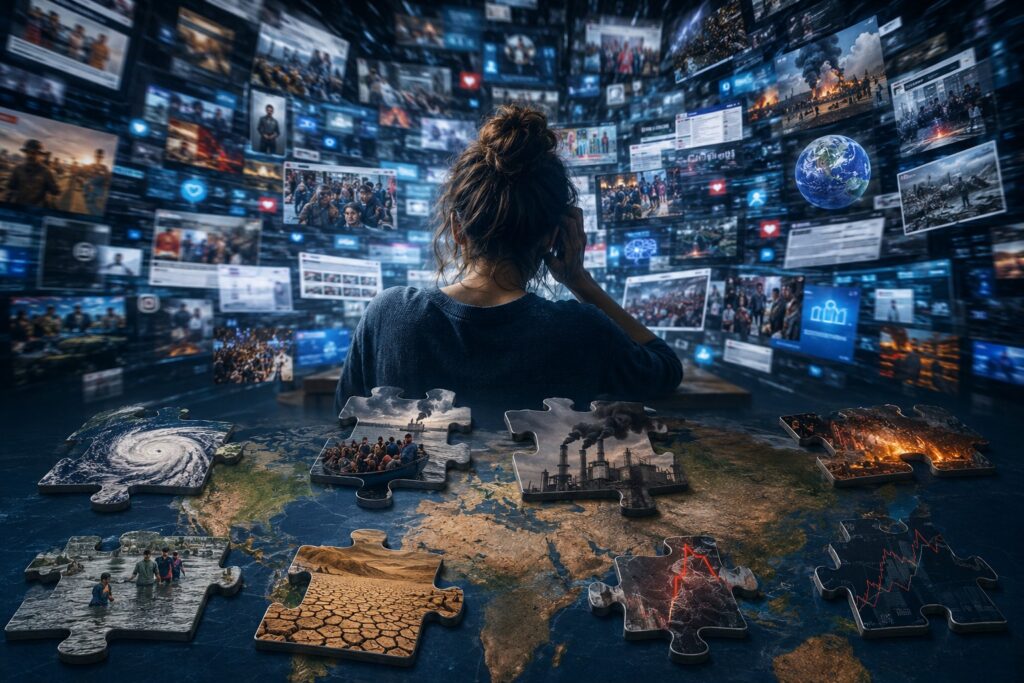
Every day, an uninterrupted stream of information pours across television screens, smartphones and computers. Finance. Climate. Democracy. Migration. Artificial intelligence. Food security. War.
The list never ends.
“But ordinary citizens,” Savio said, “are not encyclopedias.”
The consequence is paradoxical.
Never before has humanity had access to so much information.
Never before has it been so difficult to understand how that information fits together.
The more disconnected the information becomes, the greater the feeling that the world is moving beyond anyone’s ability to comprehend—or influence.
It is precisely this paradox that inspired The Global Citizen Handbook.
Written by Savio together with educator Giuliano Rizzi, the book asks a deceptively simple question:
How can citizens respond responsibly to global challenges if they no longer understand the world they inhabit?
That question lies at the center of a handbook that is less a conventional textbook than an invitation to rethink citizenship itself.
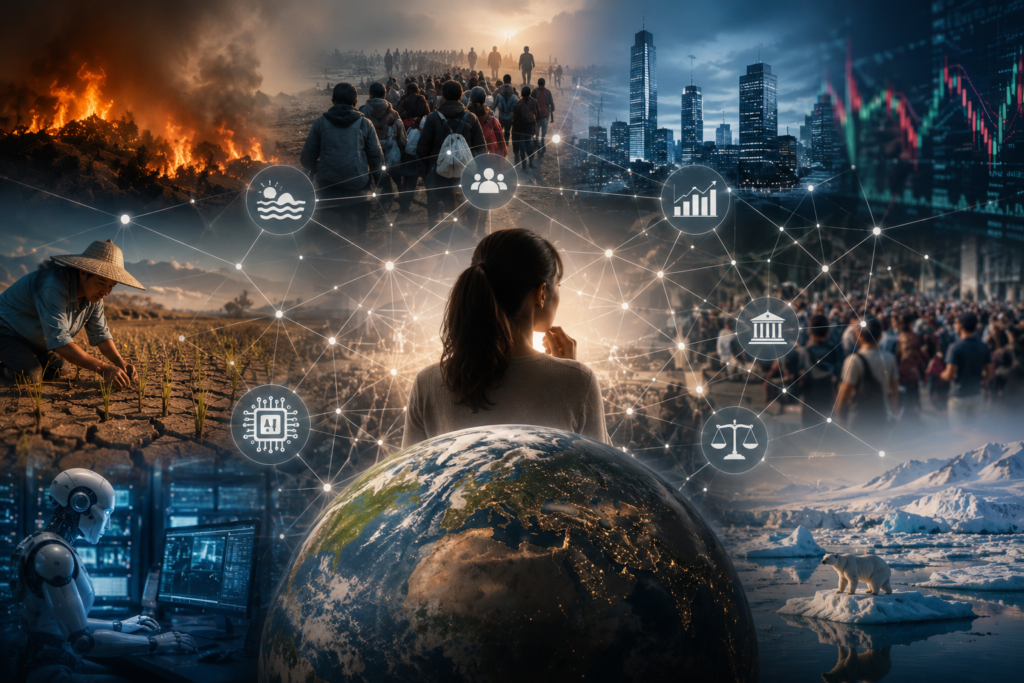
For Savio and Rizzi, the defining challenges of the twenty-first century are no longer isolated problems waiting for separate solutions.
They form an interconnected system.
Climate change influences migration.
Migration reshapes economies.
Economic instability fuels political polarization.
Artificial intelligence transforms labor markets, information ecosystems and democratic institutions.
Every challenge affects every other challenge.
Understanding that interconnectedness, they argue, is the first responsibility of citizenship.
Before societies can solve problems, citizens must first understand them.
Why Savio and Rizzi Wrote This Book
If the first challenge confronting citizens today is uncertainty, the second is fragmentation.
Information has never been more abundant. News travels instantly across continents. Artificial intelligence summarizes events within seconds. Social media platforms ensure that almost every crisis becomes immediately visible.
Yet visibility, Savio argues, is not the same as understanding.
“Today it is almost impossible to gain a coherent understanding of the world simply by following daily news,” he writes in The Global Citizen Handbook.
The observation goes beyond a criticism of modern media.
It is an assessment of how the architecture of information itself has changed.
Daily headlines encourage people to think in isolated events rather than interconnected processes. A financial crisis appears separate from migration. Migration appears separate from climate change. Artificial intelligence is discussed independently from democracy. Food security is reported without reference to conflict or environmental degradation.
The result is a fragmented picture of reality.
“The ordinary citizen,” Savio said, “is not an encyclopedia.”
No individual can absorb an endless stream of disconnected information and spontaneously construct a coherent understanding of the world.
Instead, many experience a growing sense of helplessness.
Problems appear overwhelming precisely because their relationships remain invisible.
For Savio, this is one of the defining challenges of democracy in the digital age.
Citizens cannot participate meaningfully in public life if they cannot understand the forces shaping it.
That realization became the starting point for The Global Citizen Handbook.
Rather than producing another reference book filled with statistics and expert analysis, Savio and Giuliano Rizzi set out to create something fundamentally different.
“Our purpose was never simply to explain today’s global problems,” Savio said. “We wanted to create a handbook that encourages readers to stop, reflect and ask themselves questions.”
The format itself reflects that ambition.
Each chapter introduces one of the defining issues of our time through documented evidence drawn from international organizations, academic research and reliable data.
But it does not end there.
Readers are then invited to explore concrete examples of communities that have addressed similar challenges successfully.
Finally, every chapter concludes with questions designed not to test knowledge, but to encourage reflection.
The intention is not passive learning.
It is active citizenship.
Facts alone, Savio believes, are no longer enough.
Information must be transformed into understanding.
Understanding must become judgment.
And judgment must ultimately lead to participation.
That educational philosophy distinguishes The Global Citizen Handbook from conventional books on globalization or international affairs.
It is neither a textbook nor a manifesto.
It is, instead, a practical guide for citizens living in a world where local decisions increasingly carry global consequences—and where global developments inevitably shape everyday life.
In many respects, the handbook reflects a conviction that has guided Savio throughout more than sixty years of journalism.
The role of journalism is not simply to report what happened yesterday.
It is to help citizens understand the world they must help shape tomorrow.
Understanding an Interconnected World
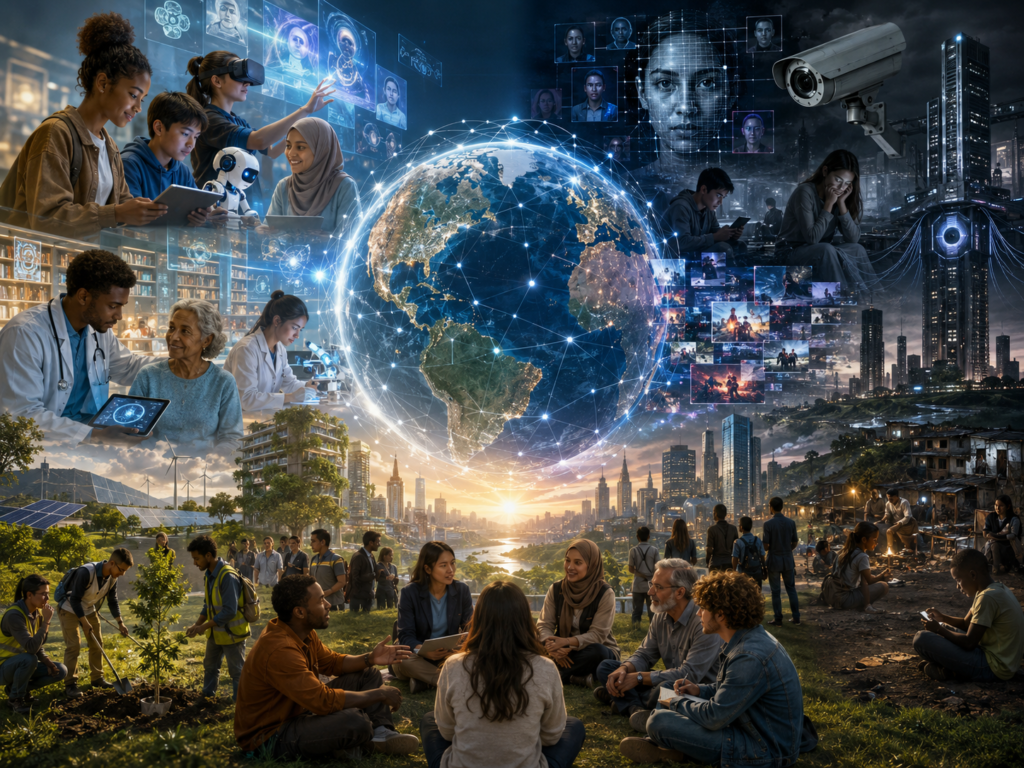
The central insight of The Global Citizen Handbook is that the defining problems of the twenty-first century can no longer be understood in isolation.
Each chapter examines a different subject—inequality, climate change, war, artificial intelligence, migration, democracy, finance, organized crime, public health and demographic change—but the authors repeatedly return to the same conclusion: none of these issues exists independently of the others.
Instead, they form what might be called an ecosystem of global crises.
Climate change does not simply alter weather patterns.
It accelerates migration, deepens food insecurity, fuels political instability and intensifies competition over natural resources.
War is no longer merely a military conflict.
It disrupts energy markets, weakens international institutions, displaces millions of people and diverts resources away from education, health care and sustainable development.
Artificial intelligence is not presented simply as a technological revolution.
It is examined as a force capable of reshaping employment, democracy, information, ethics and even the distribution of power among nations.
Throughout the handbook, Savio and Rizzi invite readers to move beyond linear thinking.
The question is no longer whether climate change causes migration, or whether inequality undermines democracy.
It is how these forces reinforce one another in ways that no single discipline—or government—can fully address alone.
One of the book’s most compelling chapters examines global inequality.
Drawing upon reports from organizations such as Oxfam and the United Nations, the authors describe a world in which wealth and decision-making power have become increasingly concentrated among a remarkably small number of individuals and institutions.
The emergence of “centibillionaires,” the expansion of tax havens, the growing dominance of financial markets and the weakening of organized labor are presented not merely as economic developments, but as democratic concerns.
When economic power becomes political power, who sets public priorities?
Whose voices are heard?
And whose are ignored?
Those questions echo the philosophy that inspired Roberto Savio to establish Inter Press Service more than six decades ago: journalism should help make visible those who remain invisible in global debates.
The chapters on democracy are equally thought-provoking.
Rather than treating democratic decline as a purely political phenomenon, the authors connect it to widening inequality, digital disinformation, declining trust in institutions and the concentration of economic and technological power.
The discussion of artificial intelligence reflects the same balanced approach.
Savio and Rizzi recognize AI’s extraordinary potential to improve education, health care and access to knowledge.
At the same time, they warn of algorithmic bias, digital dependence, surveillance, misinformation and the growing concentration of technological power in the hands of a small number of governments and corporations.
The handbook does not advocate fear of technology.
It advocates democratic stewardship of technology.
Again and again, readers encounter the same underlying message.
Global problems demand global understanding.
But understanding alone is not enough.
Knowledge acquires meaning only when it leads to reflection.
Reflection becomes valuable only when it informs action.
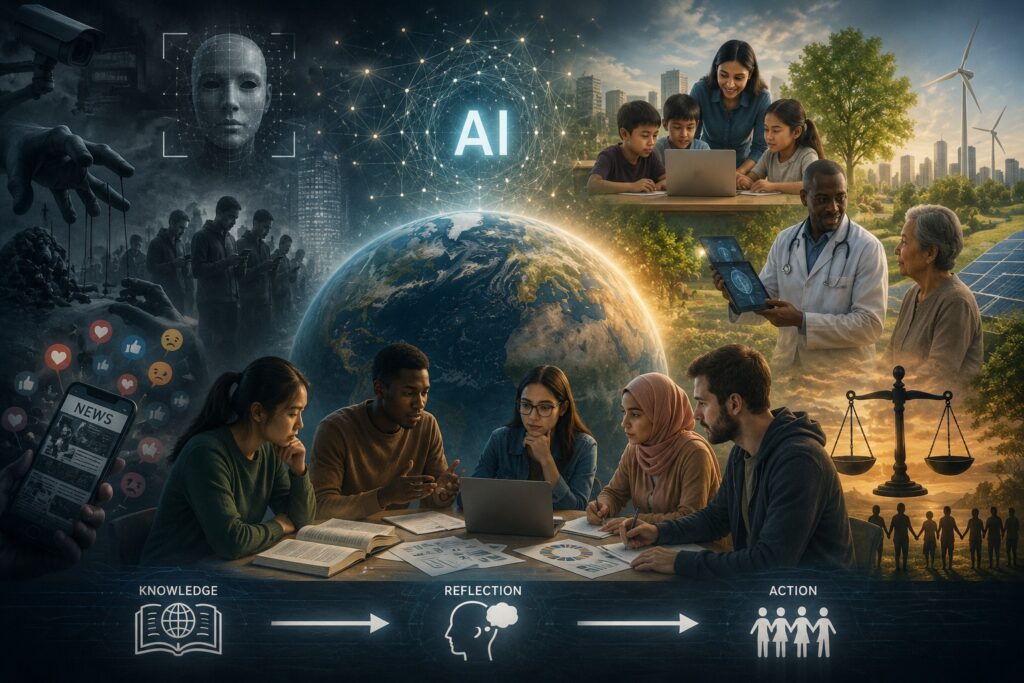
That is why every chapter concludes not with definitive answers, but with questions.
The purpose is not to tell readers what to think.
It is to help them think more deeply.
In that sense, The Global Citizen Handbook is less a book about global affairs than a book about citizenship itself.
Its ambition is not merely to explain the world.
It is to prepare citizens to participate in shaping it.
From IPS to Global Citizenship
For INPS Japan, The Global Citizen Handbook represents more than the publication of an important new book.
It also represents the continuation of an idea.
When Roberto Savio founded Inter Press Service in Rome in 1964, his ambition extended far beyond creating another international news agency.
He wanted to change the geography of global journalism.
At a time when international news was overwhelmingly produced from the perspective of political and economic powers, IPS sought to widen the conversation by bringing international attention to voices and experiences that rarely reached the world’s front pages.
The philosophy later became widely associated with a simple but powerful expression:
Giving Voice to the Voiceless.
For Savio, however, the phrase carried a deeper meaning.
The objective was not simply to report on marginalized communities.
It was to enable citizens everywhere to understand how the lives of those communities were connected to their own.
Journalism, in his view, should not merely describe events.
It should reveal relationships.
It should explain why seemingly distant events matter locally—and why local actions increasingly carry global consequences.
That philosophy has shaped the work of IPS for more than sixty years.
It has also inspired the editorial mission of INPS Japan.
For more than a decade, INPS Japan and Soka Gakkai International (SGI) in consultative status with the UN’s Economic and Social Council (ECOSOC) and with 13 million members in 192 countries and territories, have collaborated on international media initiatives that share a common purpose: helping readers understand the global challenges that increasingly shape everyday life. This multilingual publishing platforms and knowledge database serve as a mechanism that connects readers around the world, through reflection and action in their daily lives, with the people whose lives and voices are conveyed in the articles, helping to turn the movement for peace and coexistence into a living reality.
Projects such as Global Citizenship, SDGs for All and Toward a World Free from Nuclear Weapons have examined issues ranging from climate change and sustainable development to peacebuilding, nuclear disarmament and human security.
Their common thread has never been advocacy alone.
It has been understanding.
The conviction underlying these initiatives is that citizens are more likely to act responsibly when they understand not only individual events, but also the larger forces that connect them.
That same conviction lies at the heart of The Global Citizen Handbook.
In many respects, the handbook can be read as an extension of Savio’s lifelong philosophy.
While the IPS Japan–SGI media projects seek to help people understand the world through journalism, The Global Citizen Handbook seeks to help them understand it through education.
The medium differs, but the mission remains the same.
From reporting the world’s interconnected realities, Savio and Rizzi now invite readers to explore those realities for themselves—to ask questions, challenge assumptions and recognize that informed citizenship is one of democracy’s most valuable resources.
In that sense, the handbook is more than a guide to global issues.
It is an invitation to become the kind of citizen that an interconnected world now requires.
A Message from Dr. Savio to Readers of INPS Japapn-SGI media projects
Asked what he ultimately hopes readers will take away from the INPS Japan–SGI media projects and The Global Citizen Handbook, Roberto Savio returns to a theme that has guided his work throughout his career.
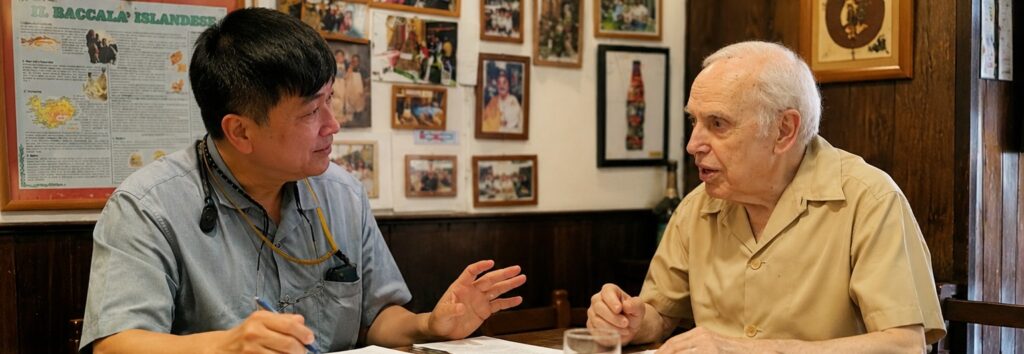

Reflecting on the INPS Japan–SGI media projects, Roberto Savio recalled the message contributed by Dr. Daisaku Ikeda, the third president of Soka Gakkai, to the first annual compilation of the SGI-INPS Japan/IPS media partnership, published in 2010.
In his message, President Ikeda wrote:”…Herein lied the importance of education, in the broadest sense of the word. When people are empowered with accurate knowledge, they naturally understand the actions they need to take. Exchanging views among those closed to us, they can learn together and search for the best and most effective forms of action.” “The media have an especially important role to play in this educational process. By making objective information widely available and offering analysis from a range of standpoints, the media can bring into sharper focus the nature of issues and the actions to be taken to resolve them. IPS has taken as its special mission the work of ‘giving a voice to the voiceless.’ Soka Gakkai International is dedicated, from a civil society perspective, to building a culture of peace. It is a great joy to be able to collaborate with IPS in this project to provide a forum for dialogue to explore meaning of solutions to this most critical of issues.”
Savio said he was pleased to see this unique partnership between two like-minded organizations continue to flourish. More than a media collaboration, he said, it embodies their shared belief that independent journalism, education and dialogue can empower citizens to better understand the world and assume responsibility for shaping a more peaceful future. Sharing SGI’s aspirations expressed by Dr. Ikeda, Savio described these media platforms in his message as important “base camps” on the climb toward what he called “sanguine optimism.”
Turning to The Global Citizen Handbook, Savio said its objective was never simply to explain the world.
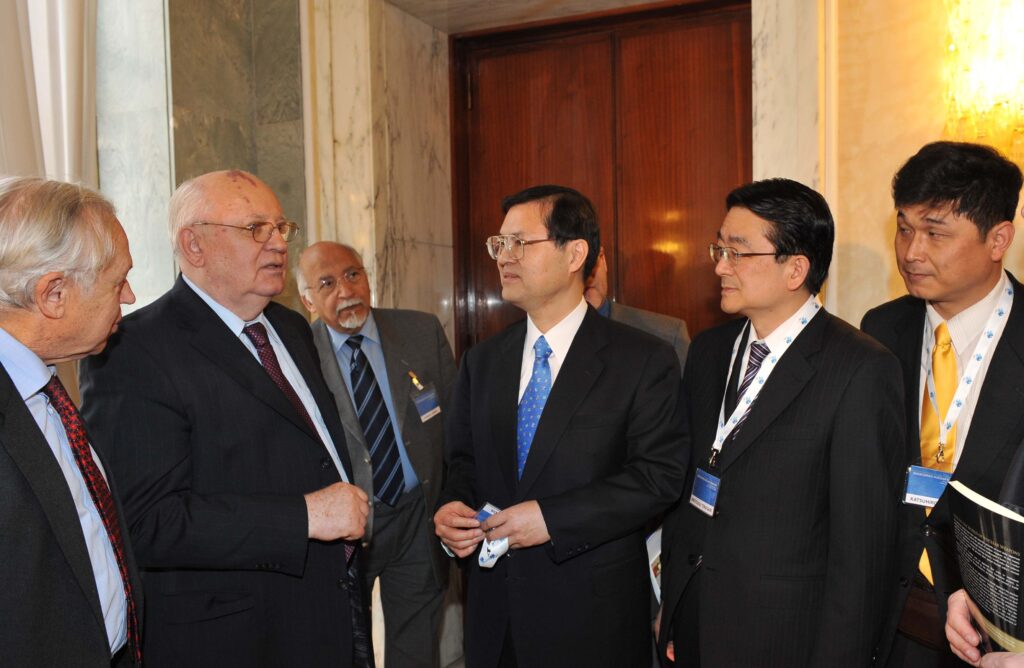
It was to help people understand their place within it.
“Our purpose was not merely to produce another book about global problems,” Savio said. “We wanted to create a handbook that encourages readers to stop, reflect and ask themselves questions.”
For that reason, The Global Citizen Handbook is deliberately interactive.
Each chapter combines documented evidence with examples of communities that have successfully addressed the issue under discussion, followed by questions intended to encourage readers to think critically rather than passively absorb information.
Facts, Savio believes, are only the beginning.
Knowledge becomes meaningful only when it changes the way people see the world—and ultimately the way they act within it as Dr. Ikeda rightfully pointed out in his message.
That conviction reflects another of the handbook’s central ideas.
Today’s defining challenges are no longer separate problems waiting for separate solutions.
“They are all interconnected,” Savio said.
“Climate change influences migration. Migration affects economies. Economic conditions shape politics. Politics influences education, public health and social stability. Artificial intelligence now touches almost every aspect of human life.”
“No citizen who understands only the local dimension can fully understand the world we now inhabit.”
That is why the handbook repeatedly invites readers to step beyond the boundaries of their own experience.
Not because local communities matter less.
But because local realities increasingly reflect global forces.
The challenge, Savio believes, is therefore not simply to become better informed.
It is to become more conscious.
More capable of recognizing relationships.
More willing to think beyond borders.
More prepared to participate in democratic life with both knowledge and responsibility.
Looking ahead, Savio expresses a hope that extends beyond the publication of a single book.
“We hope readers will reflect on what it truly means to become global citizens,” he said.
“Global citizenship is not about abandoning one’s own country or culture. It is about recognizing that our responsibilities no longer stop at national borders.”
“It means understanding that our decisions, our consumption, our politics and our values increasingly affect people we may never meet.”
For Savio, that realization represents one of the defining responsibilities of citizenship in the twenty-first century.
It is also, perhaps, the handbook’s most important invitation.
Not simply to read.
Not simply to learn.
But to participate.
Roberto Savio – the compass of OtherNews – is a journalist, communication expert, political commentator, activist for social and climate justice and advocate of global governance. In 1964, he founded Inter Press Service (IPS), of which he was Director-General for many years. He is Deputy Director of the Scientific Council of the New Policy Forum (formerly the World Policy Forum), founded by Mikhail Gorbachev and also a member of the International Committee of the World Social Forum (WSF).
INPS Japan